Pressure (PG-13)
29/07/26 21:59 Filed in: 2026
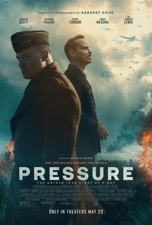
Starring: Andrew Scott
May 2026
Warning! This is NOT a movie review. This is a critique of the film. Intended to initiate a dialogue, the following analysis explores various aspects of the film and may contain spoilers. For concerns over objectionable content, please first refer to one of the many parental movie guide websites. Ratings are based on a four star system. Happy reading!
Perfectly timed to hit theaters right before the 250th Anniversary of America on July 4th, Pressure tells the story of D-Day from a unique angle most people probably haven’t considered. The movie title is a double entendre since it refers to the immense stress the leaders of the combined Allied forces were under prior to the attack, as well as the intense weather systems that created massive storms that pounded Normandy, France on the proposed date for the historic military operation. The entire thrust of the movie isn’t about what you’d expect, the preparation for the invasion or the horrific battle itself (that’s been done plenty of times before in movies). Rather, the movie is focused on the weather.
General Dwight “Ike” Eisenhower (Brendan Fraser) of the U.S. and General Bernard “Monty” Montgomery (Damian Lewis) of the U.K. are gung-ho to move forward with the unparalleled strike. But a disagreement between American meteorologist Irving Krick (Chris Messina) and British meteorologist James Stagg (Andrew Scott) throws a monkey wrench into the “go/no go” decision. Krick, who has a perfect record predicting weather for Hollywood directors and the U.S. military, calls for clear skies and sunshine. Stagg’s forecast is much gloomier: wind, rain and 8-10-foot waves. It would be impossible to conduct a full-scale naval operation in such inclement conditions.
Eisenhower and Montgomery find themselves caught between drastically divergent outlooks. As military men, their natural inclination is to attack. But, as the old chestnut cautions, discretion is the better part of valor. The arguments that ensued between these four men, and the ultimate decision they arrived at, changed the course of history.
On the face of it, an entire movie focused on the weather patterns leading up to one of our nation’s most pivotal battles doesn’t sound very exciting, but the performances help sell the story. While it’s a stretch to say Fraser looks, acts or talks like Eisenhower, he delivers a solid performance as a man desperate to atone for a recent training exercise turned bloody massacre. Lewis’ thick British accent is convincing, and his bravado and hawkish stare are highly effective in bringing Montgomery to life onscreen. Eisenhower’s assistant, Kay Summersby (Kerry Condon), is the heart and conscience of the film. She serves as a buffer between Eisenhower and Stagg, whose unwavering convictions frustrate and infuriate the action-oriented American general.
But what really makes the film pop is Messina and Scott—their backgrounds playing a cocky twit (Messina in The Newsroom) and an unhinged, evil mastermind (Scott in Sherlock), perfectly qualify them to play rockstar weatherman Krick and cautious, methodical meteorologist Stagg here. The contentious relationship between Krick and Stagg provides palpable tension, snappy dialog, and just enough doubt about who’s right to sustain the drama throughout the picture.
The friction between Krick and Stagg is, at its core, a battle of methodologies. Krick follows the time-honored approach of using weather records from the past to predict the future. Stagg believes weather is unpredictable, and can defy historic models at any moment. Stagg uses a variety of reports—measuring wind, cloud density, high altitude (via weather balloons), etc.,—from weather stations near and far (even thousands of miles away) to help him predict the weather. This weather smackdown could be billed as historical patterns v real-time data. The latter was a paradigm shift in meteorology.
When the D-Day operation is threatened by unprecedented weather (for the month of June), Krick and Stagg bury the hatchet and pool expertise to predict the best time for the Allied troops to attack the French beaches. There are some quick-cut, fairly bloodless war scenes of soldiers exiting transports and charging the beach in stormy weather. These action beats, intercut with scenes back at HQ—where worried generals wait with baited breath for the first reports to come in, are effective in giving a taste of the horrors of the conflict without delivering a blow-by-blow depiction of the battle, which you can certainly see elsewhere, i.e., Saving Private Ryan, Band of Brothers, etc. While other movies focus on the violence of the battle, Pressure focuses on how the weather affected the battle.
In the end, Pressure is a taut WWII movie that recounts the D-Day invasion from a rather solitary perspective. Whether this movie stands the test of time is anyone’s guess. But for those who love history or just want to learn something new about the landmark battle the film foregrounds, Pressure is well worth watching.
Now, if you’ll excuse me, I’m feeling the pressure to wrap this up so you can read it.
Rating: 2½ out of 4